
How Can We Africanize Our Faith:
Another Look at the Contextualization of Theology
Keywords:
Contextualization, Indigenization, Biblical Hermeneutics, African Theology, Global/Ethnic TheologyAbstract
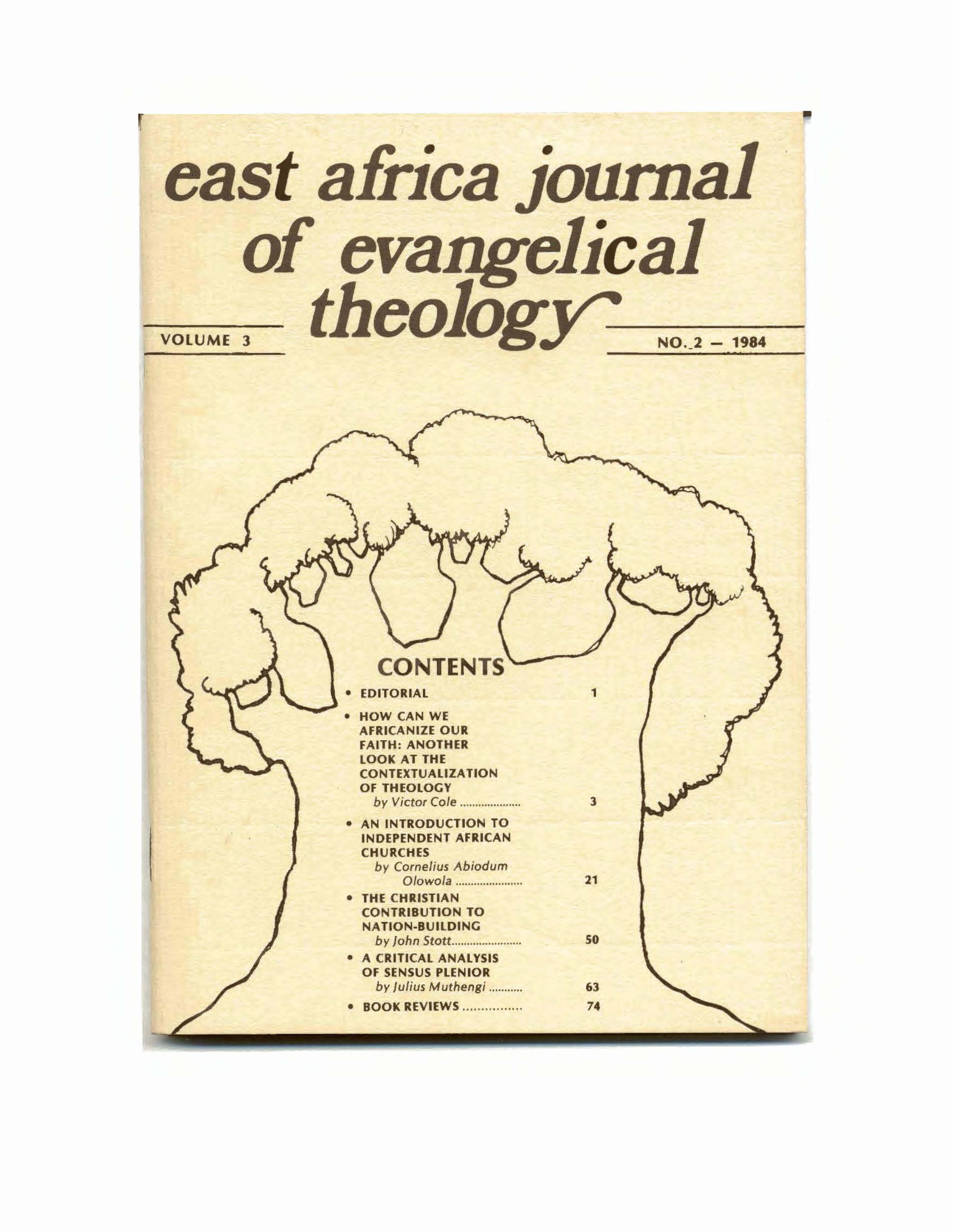
This article examines the ongoing debate surrounding the contextualization of theology, tracing its historical roots to the World Council of Churches (WCC) Theological Education Fund in the early 1970s. Victor Cole defines contextualization as a process of formulating and living out theology derived from biblical exegesis within a specific socio-cultural context, maintaining Scripture as the ultimate authority. The author surveys global trends—such as Political, Dialogue, and Missiological theologies in Africa; Syncretistic, Accommodational, and Situational theologies in Asia; Black and Liberation theologies in the Americas; and urban/dialogical institutes in Europe—distinguishing human-centered "theologies of contextualization" from true "contextualized theology". Finally, Cole outlines four core factors essential to the process of contextualizing theology: philosophical worldviews, cultural settings, linguistic contexts, and hermeneutical principles.
Downloads
Downloads
Published
Issue
Section
License
Copyright (c) 1984 Scott Christian University

This work is licensed under a Creative Commons Attribution 4.0 International License.