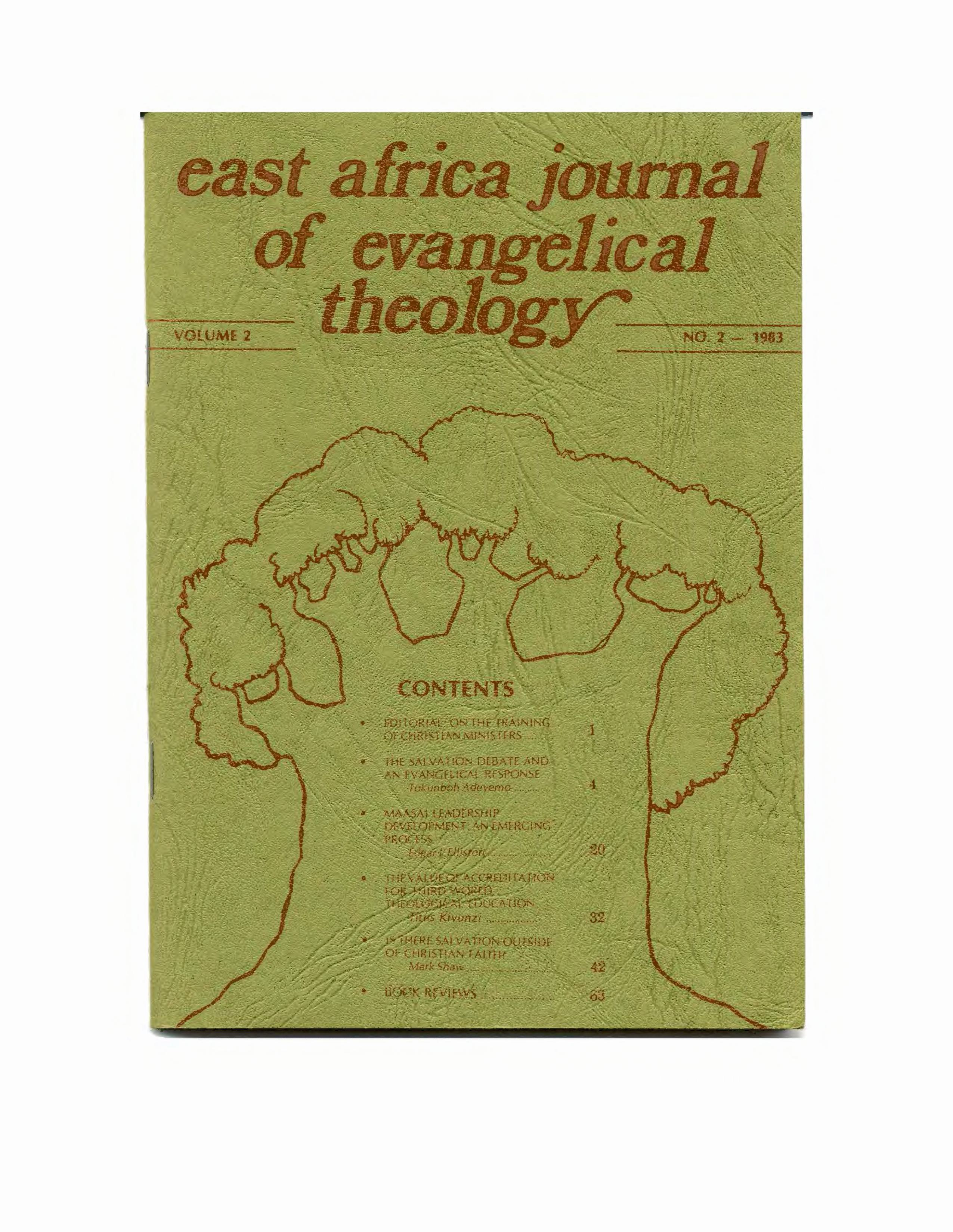
The Value of Accreditation for Third World Theological Education
Keywords:
Accreditation in theological education Third World theological education Educational standards Institutional self-study Theological education evaluationAbstract
The main purpose of this article is not to give answers to all the issues involved in accreditation of theological education in the Third World. The writer is only interested in posing some questions for consideration, which may lead to further research. Our discussion is divided into three parts. The first part deals with the problem of accreditation as seen by the educators and the church: its meaning, what it does, and its benefits. The second part deals with the strengths of accreditation in regard to: its standards, self-study by the institution, and its results as seen in the graduates. The third part looks into the weaknesses of accreditation.
Downloads
References
Theological Education 14: Issues in Accreditation, (Autumn 1977, Vol. XIV; No. 1, p. 11).
John R. Mayor, Accreditation In Teacher Education: Its Influence on Higher Education. (Washington, D.C.: National Commission on Accreditation, 1978), p. 6.
Materials from ACTEA, "Your Questions Answered," p. 1.
Paul Bowers, ed., Evangelical Theological Education in the 1980's (ICAA), p. 36.
Sherry S. Harris, ed., Accredited Institutions of Postsecondary Education: Programs, Candidates, (American Council of Education, 1981-82), pp. 383-386.
"Standards and Procedures for Accreditation Postsecondary Level and Secondary Level," (Caribbean Association of Bible Colleges, First Edition, 1979), p. 7.
Downloads
Published
Issue
Section
License
Copyright (c) 1983 Titus Kivunzi (Author)

This work is licensed under a Creative Commons Attribution 4.0 International License.